Is your car's air conditioning not working properly? It could be a problem with the AC hose from the compressor to the condenser. This hose is responsible for carrying refrigerant between the two components, and if it breaks or becomes clogged, the entire AC system won't work. Keep reading to understand its purpose and how to fix or replace any issues you may experience.
Trying to navigate a hot summer day in a car without a functioning AC can be both frustrating and uncomfortable. This is where the AC hose from the compressor to the condenser comes in. A damaged or clogged hose can lead to poor cooling performance, increased fuel consumption, and even more serious problems such as compressor failure. If you suspect an issue with your AC hose, prompt action is crucial to prevent further complications.
The AC hose from the compressor to the condenser plays a key role in the cooling process of your car's air conditioning system. It transports high-pressure refrigerant from the compressor to the condenser, which is typically located in the front of the vehicle near the radiator. As the refrigerant passes through the condenser, it cools down and condenses into a liquid. This liquid refrigerant is then passed through an expansion valve, which reduces its pressure and allows it to evaporate. The evaporation process absorbs heat from the car's interior, cooling the air as it flows through the vents.
In summary, the AC hose from the compressor to the condenser is a crucial component of your car's air conditioning system. It ensures the efficient transfer of refrigerant between the two components, enabling the system to cool the air inside your vehicle. If you suspect an issue with your AC hose, it's essential to address it promptly to restore optimal cooling performance and prevent potential damage to other parts of the system.
The Perilous Journey: AC Refrigerant's Odyssey from Compressor to Condenser
IntroductionIn the realm of air conditioning and refrigeration systems, the refrigerant embarks on a relentless voyage through a labyrinth of components, each playing a pivotal role in the intricate dance of heat exchange. This odyssey begins in the compressor, where the refrigerant undergoes a dramatic transformation, setting the stage for its subsequent adventures.1. The Compressor: Where Pressure and Temperature Soar
The compressor, the heart of the refrigeration system, exerts immense pressure on the refrigerant, causing its temperature to skyrocket. This surge in pressure and temperature marks the refrigerant's metamorphosis from a low-pressure, low-temperature vapor to a high-pressure, high-temperature gas. 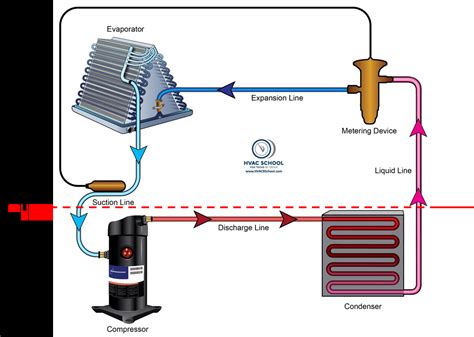
2. Condenser: A Haven of Heat Dissipation
The superheated refrigerant gas, bearing the burden of heat, is propelled into the condenser, a haven of heat dissipation. Here, the refrigerant encounters a series of serpentine coils, providing ample surface area for heat exchange. As the refrigerant meanders through these coils, it sheds its thermal burden to the surrounding environment, transforming from a high-pressure, high-temperature gas to a high-pressure liquid. 
3. The Throttling Device: A Gateway to Pressure Reduction
The high-pressure liquid refrigerant, having relinquished its heat, embarks on the next leg of its journey, encountering the throttling device. This ingenious mechanism, often an expansion valve or capillary tube, strategically reduces the refrigerant's pressure, causing a dramatic drop in temperature. As the refrigerant expands through the throttling device, it transforms into a low-pressure, low-temperature mixture of liquid and vapor. 
4. Evaporator: The Crucible of Heat Absorption
The refrigerant's odyssey culminates in the evaporator, a haven of heat absorption. Here, the refrigerant encounters a series of serpentine coils, mirroring those in the condenser. However, in this realm, the refrigerant's role is reversed. It absorbs heat from the surrounding environment, causing it to boil and transform into a low-pressure, low-temperature vapor, thus completing its transformative cycle.  ConclusionThe refrigerant's journey through the intricate labyrinth of the air conditioning or refrigeration system is a symphony of energy transfer, where heat is relentlessly pursued, captured, and expelled. This odyssey underscores the profound impact of pressure and temperature in shaping the refrigerant's physical state and its ability to absorb and release heat. As the refrigerant traverses this intricate network of components, it undergoes a series of transformations, ultimately fulfilling its mission of creating a comfortable and temperature-controlled environment.FAQs1. What is the primary function of the compressor in the refrigeration cycle?The compressor's paramount role lies in elevating the refrigerant's pressure and temperature, initiating the refrigerant's transformative journey.2. How does the condenser contribute to the refrigeration process?The condenser serves as a sanctuary for heat dissipation, where the refrigerant sheds its thermal burden to the surrounding environment, transitioning from a high-pressure, high-temperature gas to a high-pressure liquid.3. What is the significance of the throttling device in the refrigeration cycle?The throttling device, acting as a strategic gateway, reduces the refrigerant's pressure, causing a notable drop in temperature, and facilitating the refrigerant's transformation into a low-pressure, low-temperature mixture of liquid and vapor.4. What role does the evaporator play in the refrigeration cycle?The evaporator emerges as the crucible of heat absorption, where the refrigerant, in its low-pressure, low-temperature state, eagerly absorbs heat from the surrounding environment, transitioning into a low-pressure, low-temperature vapor.5. Elaborate on the refrigerant's transformative journey through the refrigeration cycle.The refrigerant embarks on a remarkable odyssey, transitioning from a low-pressure, low-temperature vapor in the evaporator to a high-pressure, high-temperature gas in the compressor, then metamorphosing into a high-pressure liquid in the condenser, and finally returning to a low-pressure, low-temperature mixture of liquid and vapor in the throttling device, completing its transformative cycle.